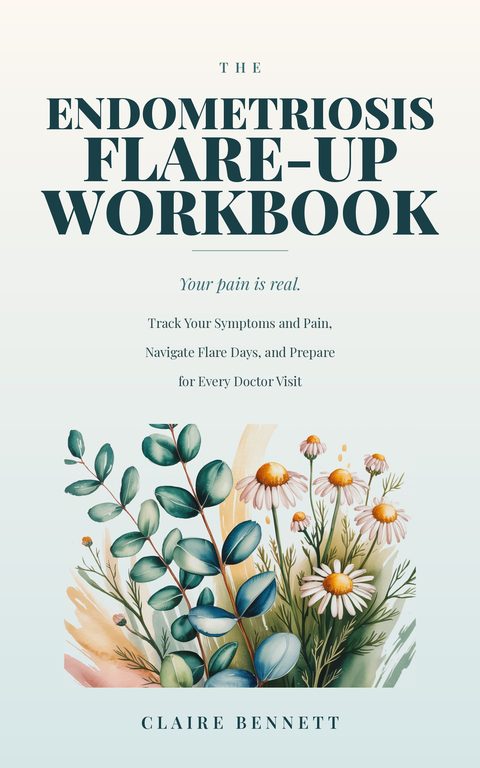
Who this workbook is for
Someone living with endometriosis — diagnosed, or still in the years-long stretch before a
diagnosis, where the scans come back clear and the pain does not.
It is also for the appointment. A great deal of what happens in a ten-minute consultation
depends on what you can say about the last three months, and memory is a poor witness under
pressure.
What it is
A workbook, not a book about endometriosis. Most of these pages are meant to be written on.
The tracking is the point: a daily symptom diary, a cycle-phase tracker with a monthly
pattern summary, logs for mood, energy and sleep, and optional food notes. Filled in over a
few cycles, they turn "it's been bad lately" into a page you can hand across a desk.
The rest of the book is what to do with what you find — in a flare, in an appointment, and in
the conversations around both.
What is inside
- Endometriosis is real — and so is your pain. The opening chapter, and the reason for it.
- Why it hurts — pain, the nervous system, and why coping tools do anything at all.
- Clear scans, real pain — understanding diagnosis, and how to talk about it.
- The trackers — daily diary, cycle phase, monthly pattern, mood, energy, sleep, food.
- When a flare hits — an action plan written to be followed when thinking is hard.
- In-the-moment tools — breathing, body scan, distress techniques.
- Everyday practices — mindfulness, self-compassion, acceptance.
- Working with your thoughts, energy and life.
- Being heard — describing pain precisely, and preparing for an appointment.
- When you are not being heard — escalating, and keeping records that hold up.
- Talking to the people in your life.
- Daily and weekly reflection.
Paperback only, and why
This is a write-in workbook, and it stays in print for a reason: the pages are laid out to be
filled in with a pen, in a book that lies open on a table. A reflowable e-reader cannot do
that, and a tracker you cannot write in is not a tracker.
The boundary, stated plainly
This workbook is not medical treatment and does not diagnose anything. It does not
recommend medication, surgery, diet or any course of care. Nothing in it should replace or
delay advice from a doctor or specialist.
What it does is help you observe your own symptoms carefully, cope in the moment, and arrive
at appointments with evidence rather than apology. Decisions about treatment belong with you
and your clinician.
If pain is severe, sudden, or different from your usual pattern, that is a call to a doctor,
not a page to fill in.
139 pages, 8.5 × 11 inches
Full-size pages, because you have to write on them. Paperback.
Optional
Want to hear about new books?
A couple of notes a month, nothing more. Unsubscribe in one click, anytime.
Double opt-in — we send a confirmation link first, and nothing until you click it.
See our privacy policy.
 Gatherwell Press